
Hilo Resident Lookup Sources
Hilo has no incorporated city government or city clerk. The useful records sit with the County of Hawaiʻi and with statewide agencies instead. Pick a source for the fact it proves, not for the volume of names it returns. A court result ties a name to a case. A voter record may establish status and district, while a license result records a credential at a stated time. None of these alone proves where someone lives now.
| Official record | Fact it can support | Custodian | Ways to obtain it |
|---|---|---|---|
| State court index | Party role, case, filings, docket events | Hawaiʻi Judiciary eCourt Kokua | Online; Hilo terminal; formal request |
| Election record | Name, district, precinct, voter status | State and County Elections | Protected online lookup; office, phone, paper request |
| Vital record | A qualifying birth, marriage, or death event | Hawaiʻi Department of Health | Online, mail, Hilo pickup; eligibility required |
| Professional license | License ID, standing, dates, discipline shown | DCCA Professional and Vocational Licensing | Free online result; written verification |
| Civic record | A dated public role or meeting appearance | Hawaiʻi County Clerk | County records portal; office; UIPA request |
Start any name check with a purpose and a date. That habit alone narrows a resident lookup. A family historian may need an old vital index or an obituary, and confirming a public board role calls for a dated county packet. A claimed professional status belongs in the state license search. Narrow routes are the easiest to cite later.
Search Hilo Court Names Carefully
The Hawaiʻi Judiciary eCourt Kokua availability page offers the strongest online path for a Hilo name tied to a state case. Person Search asks for a first and last name. Optional fields add a middle name, beginning and ending filing dates, case type, phonetic matching, and partial matching. Dates follow the DD-MON-YYYY format. A broad name can pull in unrelated people. Add a time range and case type whenever those facts are known.
| Search control | Required | How it narrows the Hilo name search |
|---|---|---|
| Last Name and First Name | Yes | Creates the initial person search |
| Middle Name | No | Separates common first and last name pairs |
| Beginning / Ending Filing Date | No | Limits results to the relevant period |
| Case Type | No | Focuses the result set on the known court context |
| Phonetic / Partial | No | Tests alternate or incomplete spelling |
The official page displays current case-system coverage and notes that some older material requires a different route. Check eCourt coverage before searching.
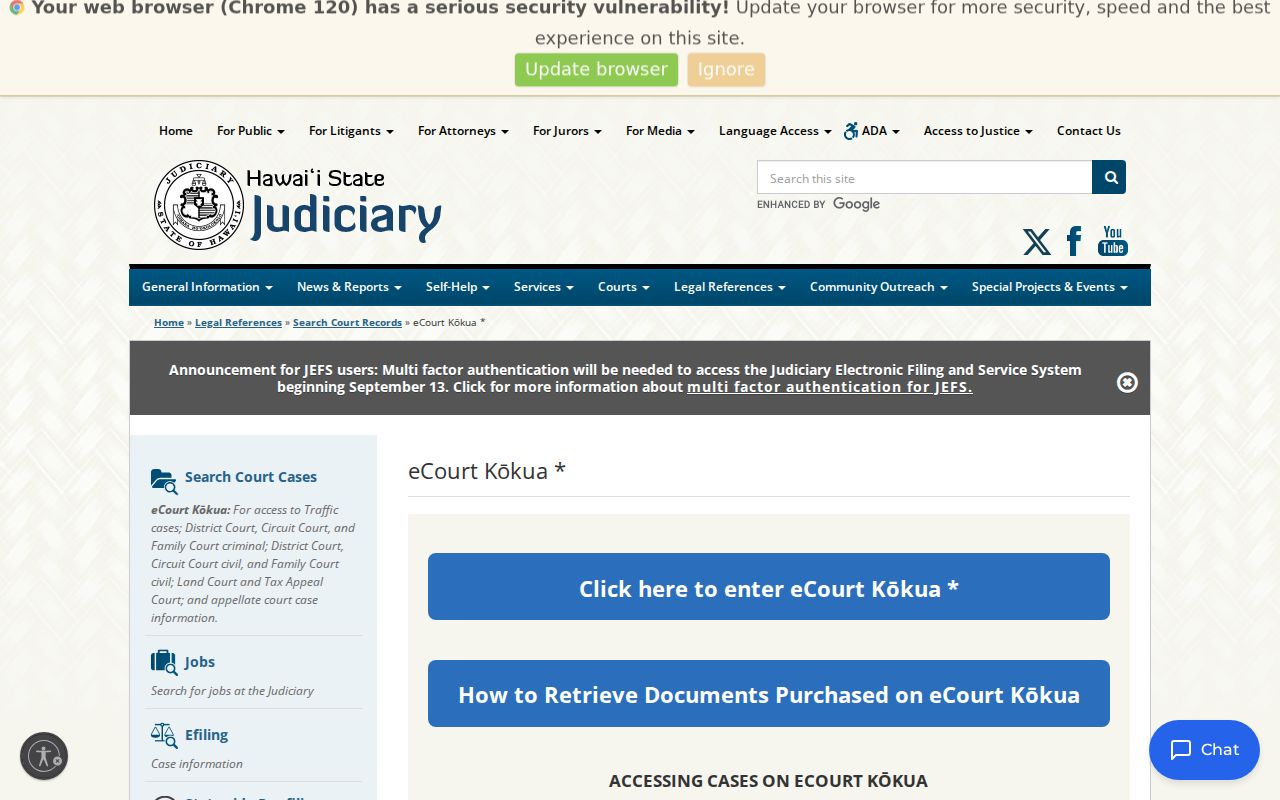
Coverage dates matter. An empty web result may point to paper, microfilm, or an offsite file rather than the absence of a case, so treat a dead end as unfinished business rather than a final answer.
Confirm Hilo Resident Lookup Hits
An eCourt result opens a Party ID and a case view with Summary, Offenses, Events, and Dockets tabs. Docket rows can list a docket number, date, document name, defendant, and party. A PDF icon marks a public document. Sealed or confidential papers stay out. That separates a real match from a same-name stranger.
- Record the case number, circuit, filing date, and party role.
- Compare attorneys, events, and public document facts.
- Label an unsupported name hit as a possible match.
- Use confirmed only when another specific fact agrees.
Basic case information is free. Online regular copies cost $3 for up to 30 pages, then $0.10 per page above 30, and certification adds $2. Payment never substitutes for identity checks, since a paid document can still concern the wrong person.
- Docket
- The dated list of filings and events in one court case.
- Index and image
- An index describes a record; an image shows the filed public document when access permits.
- Certified copy
- A custodian-authenticated copy used when ordinary screen information is not enough.
Note: A court name search is only a lead, and the Judiciary states plainly that it is not positive identification.
Verify One Hilo Resident
Keep each fact in its own lane. Merging every available item into a single profile invites error. Start with the source closest to the question, then bring in one independent point to rule out a same-name person.
- Write the full name, likely spelling variants, relevant date, and known public role. Leave out sensitive identifiers.
- Search the official system that fits the question. Add a date range, case type, license field, or public meeting date.
- Compare the result with one reliable second fact, such as a Party ID, docket event, credential date, or district.
- Save the custodian, result date, and limitation. Request a certified copy only when the use truly requires one.
A name search becomes a block search. Turn instead to the Hilo directory by street. That record path rests on parcels and deeds, so ownership alone never proves occupancy.
Hilo Voter Lookup Boundaries
The official online voter registration lookup is a protected interaction, not an open list of Hilo addresses. HRS §11-97 and state guidance define the public election slice as full name, district, precinct, and voter status. The rest of the affidavit stays protected. Social Security fragments, driver-license or state-ID numbers, and signatures are withheld. Hawaiʻi does not use party affiliation in ordinary registration. The continuation screen frames the transaction the same way. This is not a general residents directory.
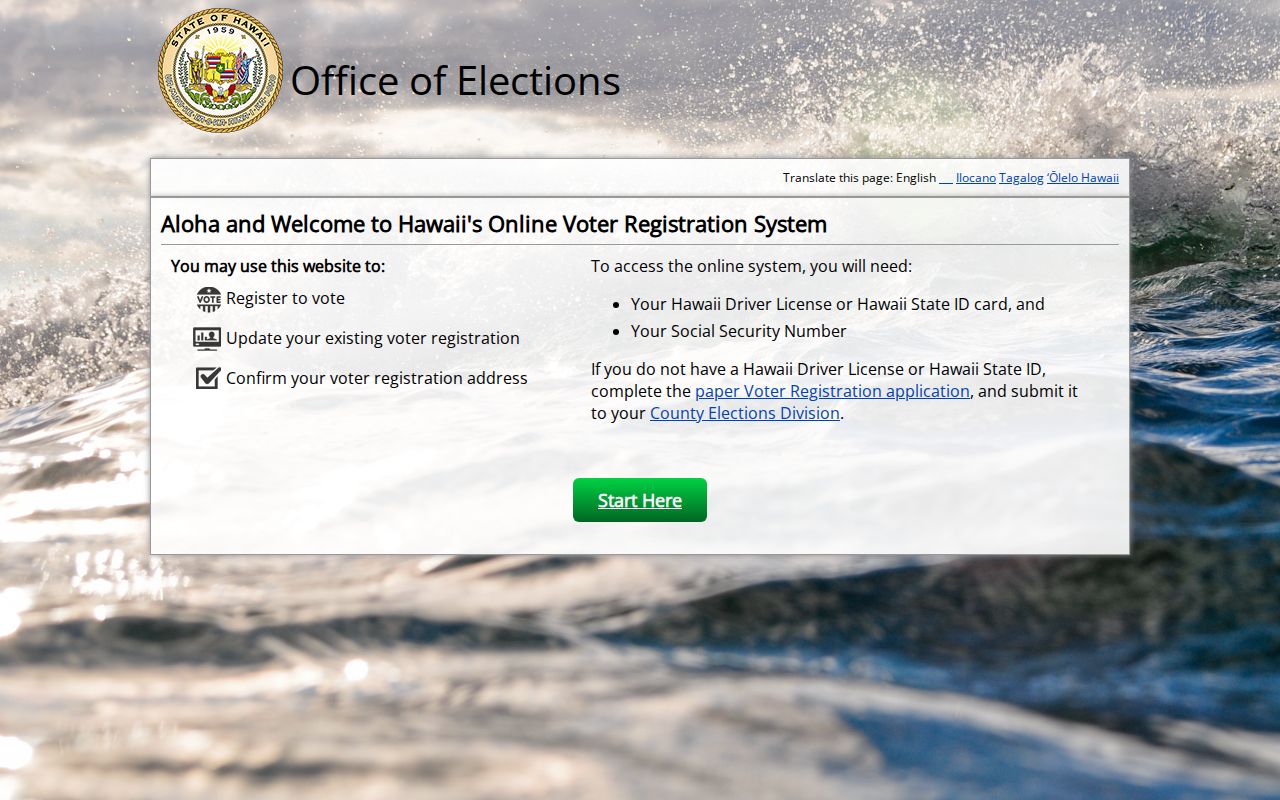
Other paths exist for a Hilo voter lookup. Hawaiʻi County Elections sits at 25 Aupuni Street, Room 1502, Hilo. The office answers questions at 808-961-8277, with fax at 808-961-8673. Paper forms can go either way. Mail them in or hand-deliver them to the office. Voter service centers offer same-day registration as another route. Request only the public election fields or a defined election record.
Hilo Vital Record Checks
A vital certificate is not an open name-search tool. Hawaiʻi Department of Health applies the direct-and-tangible-interest rule in HRS §338-14. Eligible requesters follow the DOH certificate instructions, upload or provide ID, and show the required relationship or authority. Orders can go online, by mail, or in person. Hilo pickup runs by appointment through the Hawaiʻi District Health Office after online payment. The certificate page states the entitlement gate plainly. No name search crosses that gate alone.
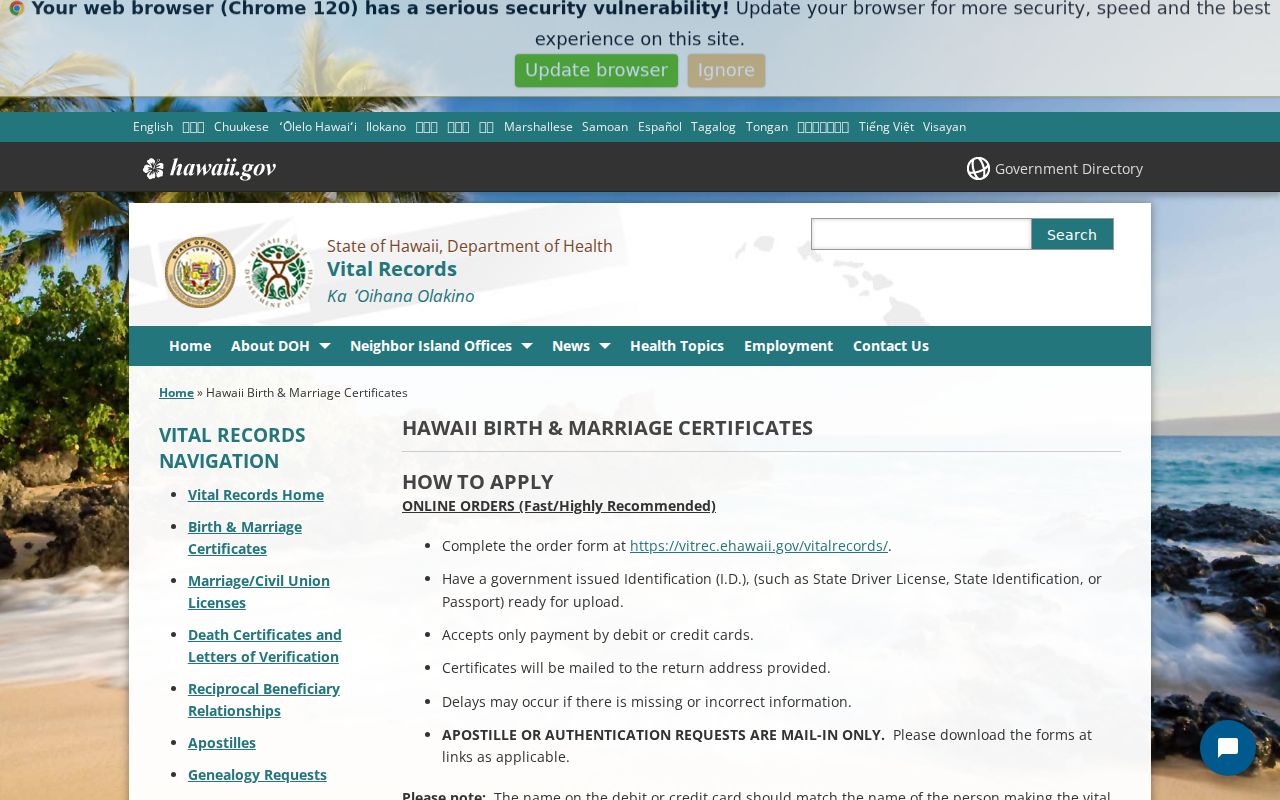
Events more than 115 years old follow the DOH genealogy route. Newer events still require direct and tangible interest. State Archives indexes and Hilo library copies help family historians. An index is not the certificate. Since February 1, 2026, DOH no longer keeps divorce records. Current requests go to Third Circuit Legal Documents.
When Hilo Lookup Portals Fail
Some Hilo records simply live outside any portal. Old Third Circuit files, gaps in the county's online systems, and paper that was never scanned all share one fallback. That fallback is Hilo Hale Kaulike at 777 Kilauea Avenue. Public terminals and physical file access are there. Hours run weekdays, 7:45 a.m. to 3:00 p.m., first-come. Call Legal Documents at 808-961-7400 before you go. Anything older than five years may sit in offsite storage. A phone call saves a trip. Expect patience after you file, too. Formal requests, online or in person, generally take at least 10 business days, and mailed requests run 15 to 20.
When no dedicated form exists, the Hawaiʻi Uniform Information Practices Act applies. HRS chapter 92F covers county and state administrative records. Name the agency, the record, the subject, and a date range. UIPA has edges, though. It does not open sealed court material, protected voter affidavits, or restricted certificates. Historic questions may fit better with the Hawaiʻi State Archives or Mookini Library. A repository named in the record itself can also help.
Check Hilo License Claims
A claimed public credential is easy to test. The DCCA professional license search returns the state's own record for a licensed Hilo name. Results may carry a license ID and active or inactive standing. They may also show original and expiration dates, current and former names, a conditional code, and any formal discipline. Treat the free online result as a dated state record only. It is not proof that the person practices today or lives in Hilo. Written license verification costs $15. The state gives that route a 20-business-day target. The DCCA search page itself shows what each field means before a name check that starts with a profession rather than a case or family event.
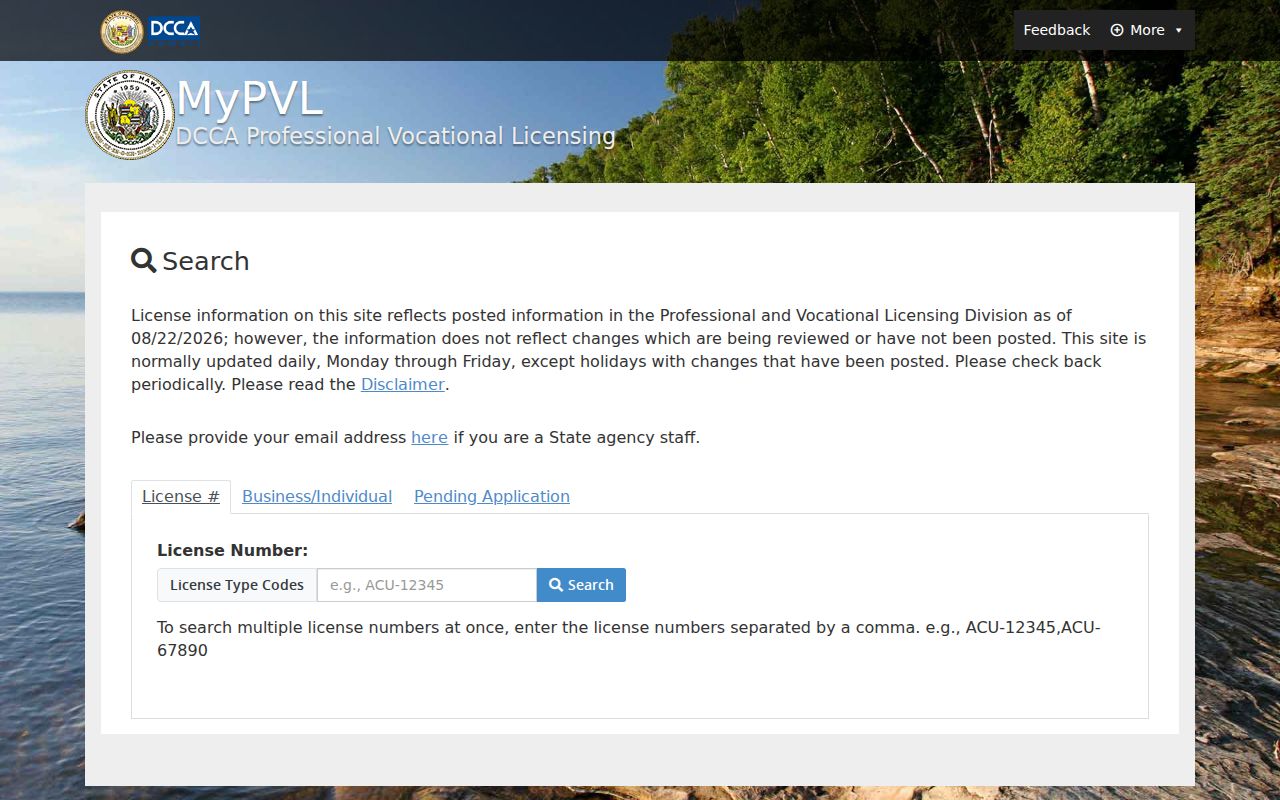
Business roles go through DCCA Business Registration, not PVL. For a civic role, County Council packets and board records carry the dated confirmation. In every case, quote the exact filing and its date, then stop at what the record actually says.
Protect People in Hilo Lookups
A missing address can be a lawful shield, not a dead end. Hawaiʻi voter confidentiality may protect an address for good cause for two election cycles. The Hawaiʻi Address Confidentiality Program, under HRS chapter 801G and HAR chapter 24-1000, gives an eligible survivor a substitute address through a certified application assistant. Never try to trace that substitute address back to a real location.
Corrections and privacy questions belong with the record custodian. No single deletion switch exists across government records. Ask what field is public. Ask how an error can be fixed. Ask which statute authorizes suppression. For commercial people-finder listings, use the service's own privacy process. Do not send sensitive identity documents to an unverified site.
Lawful use. Use Hilo name records only for a legitimate personal purpose. Never threaten, stalk, harass, impersonate, or expose a protected person.
Source limits matter just as much as lookups. The HCJDC public-history rules draw a defined scope for public adult results, while pending and nonconviction information stays confidential. Read that official guidance before treating any state history result as proof about one Hilo person.
A careful label is often the most honest result. Use confirmed official record, historical record, possible match, or not verified, and let the label carry the weight.